Daily Reflection – 10/23/2026
Sacred Scripture
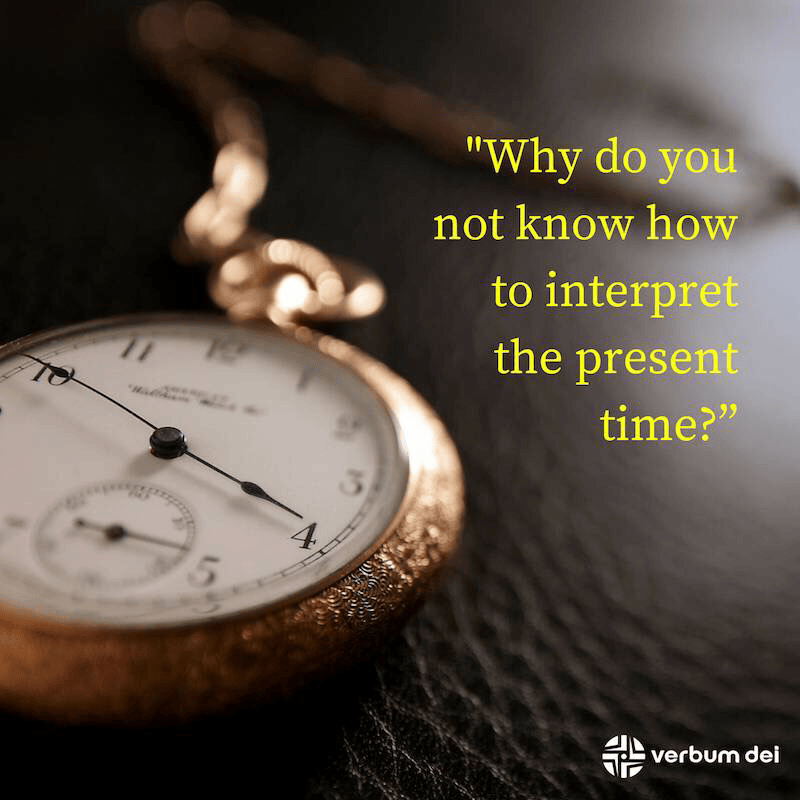
Jesus said to the crowds, “When you see a cloud rising in the west you say immediately that it is going to rain—and so it does; and when you notice that the wind is blowing from the south you say that it is going to be hot—and so it is. You hypocrites! You know how to interpret the appearance of the earth and the sky; why do you not know how to interpret the present time? Why do you not judge for yourselves what is right? If you are to go with your opponent before a magistrate, make an effort to settle the matter on the way; otherwise your opponent will turn you over to the judge, and the judge hand you over to the constable, and the constable throw you into prison. I say to you, you will not be released until you have paid the last penny.” (Luke 12:54-59)
Reflection
We can become surprisingly good at reading the signs around us while remaining remarkably poor at recognizing what is happening within us. We recognize when someone is upset, when circumstances are changing, when trouble may be approaching, or when something in our daily routine requires attention. Yet Jesus challenges us with a much deeper question: If we can recognize all these things, why are we sometimes so reluctant to recognize what God is showing us about our own lives?
That is what makes today’s Gospel uncomfortable. Jesus does not suggest that the people lack intelligence. In fact, He says exactly the opposite. They know how to observe the world and draw sensible conclusions from what they see. Their problem is that they are unwilling to apply that same honesty and discernment to their spiritual lives.
And perhaps we understand them better than we would like to admit.
There are moments when we already know what needs to change. We know when we owe someone an apology. We know when resentment has lived in our hearts too long. We know when pride is keeping us from taking the first step toward reconciliation. We know when our prayer life has become an afterthought. We know when we have become too attached to something that is drawing us away from God. The signs may indeed be as plain as the nose on our face. The difficulty is not always recognizing them. Sometimes the difficulty is accepting what they require of us.
Jesus then moves from reading the signs to settling matters with an opponent. That transition is important. Discernment is meaningless if it never leads to action.
It is easy to tell ourselves that someday we will make things right. Someday we will forgive. Someday we will have the conversation. Someday we will deal with the habit we know is unhealthy. Someday we will become more serious about prayer. But Jesus brings us back from “someday” to today.
“Make an effort to settle the matter on the way.”
We are still on the way. That may be one of the most hopeful messages hidden within this challenging Gospel. Our story is not finished. God has given us this day, this moment, this opportunity to choose differently. And choices matter because repeated choices gradually shape the people we become. Choosing kindness when irritation would be easier changes us. Choosing forgiveness instead of nursing resentment changes us. Choosing prayer instead of distraction changes us. Choosing honesty when an excuse would be convenient changes us. None of these choices may seem dramatic, but together they form a life.
Jesus is asking us to pay attention.
Perhaps God has been placing something before us for some time. Perhaps there is a relationship needing healing, a wrong needing correction, a person needing compassion, or an invitation from God that we keep postponing.
We do not need to know everything about tomorrow to follow Christ today.
We simply need the courage to recognize the signs God has already placed before us and respond faithfully. The Christian life is not primarily about predicting what comes next. It is about recognizing where Christ is calling us now and having enough faith to take the next right step.
Sometimes the truth really is right in front of us.
The question is whether we are willing to see it, accept it, and act upon it.
Prayer of The Day
“Lord Jesus, open my eyes to recognize what You are showing me today. Give me the honesty to see where I need to change, the humility to admit when I am wrong, and the courage to make things right while I still have the opportunity. Help me to stop postponing the good I already know I should do. Guide my choices so that, little by little, they shape me into the person You created me to be. Keep me attentive to Your presence and faithful to Your voice today and always. Amen.”
Daily Note
Pay attention to what God is placing before you today. There may be something you already know needs to be addressed, forgiven, changed, or made right. Don’t wait for a clearer sign when the invitation is already before you. We cannot control tomorrow, but with God’s grace, we can choose the next right thing today.